
By 2026, leadership training has quietly changed.
Not because leaders stopped caring about growth, but because the old formats stopped working. Slide decks, one hour webinars, and generic management frameworks no longer match the reality leaders are facing. The pace is faster. Teams are more distributed. Expectations are higher. And the margin for misalignment is thin.
The leaders who are thriving right now are not learning more information. They are developing better judgment, stronger self awareness, and clearer cultural instincts. And they are doing it in environments designed for depth, not distraction.
This is why leadership training retreats and organizational culture assessments are no longer nice to have. They are becoming essential.
Why Leadership Development Looks Different in 2026
Leadership used to be about decision making authority. Today, it is about influence without proximity.
Leaders are expected to set direction, build trust, and hold culture together across hybrid teams, constant change, and growing complexity. That requires more than tactical skills. It requires perspective.
In 2026, effective leadership training focuses on three things above all else.
- Clarity. Leaders need space to step back from the noise and see their patterns clearly.
- Alignment. Teams need shared language around values, expectations, and behavior.
- Integration. Learning has to translate into how leaders actually show up on Monday morning.
This is where immersive training formats outperform traditional programs.
Why Leadership Training Retreats Work When Everything Else Falls Flat
There is a reason more organizations are investing in off site leadership experiences.
Retreats remove leaders from the environments that reinforce their habits. They create psychological space. When leaders are no longer reacting to emails, meetings, and notifications, they can finally see how they lead.
Well designed leadership training retreats create:
- Time for honest reflection without performance pressure
- Structured conversations that rarely happen in the office
- Shared experiences that strengthen trust among leaders
- Clear commitments that follow leaders back into daily work
This is not about team bonding or motivation. It is about transformation.
That is why modern leadership retreats are facilitated, not inspirational. They are designed around real challenges leaders are facing right now, not abstract theory.
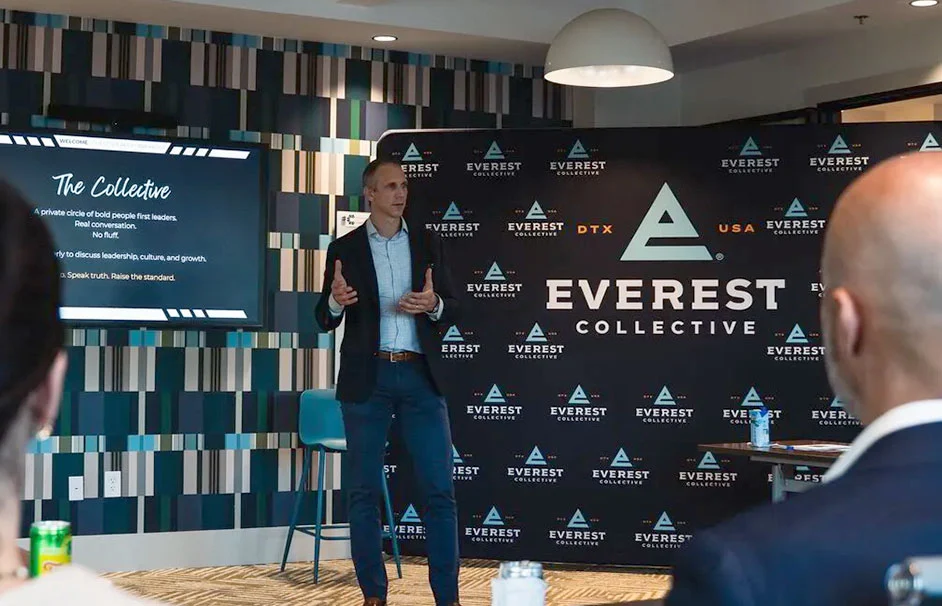
You can see how this approach works in practice through Everest Collective’s leadership training retreats, which are built to help leaders step out of reaction mode and into intentional leadership.
The Missing Link in Most Leadership Programs: Culture
Many leadership initiatives fail because they treat leadership as an individual skill set.
But leadership never exists in isolation. It is expressed through culture.
Culture shows up in how decisions are made, how conflict is handled, how feedback flows, and how accountability is enforced. When culture is unclear or misaligned, even strong leaders struggle.
In 2026, organizations are finally addressing this directly through organizational culture assessments.
Why Organizational Culture Assessments Matter More Than Ever
Culture assessments are not surveys for engagement scores. When done well, they surface the invisible rules that shape behavior inside an organization.
They answer questions leaders often sense but cannot articulate.
- What behaviors are rewarded here, intentionally or not
- Where values are stated but not practiced
- How leadership actions are interpreted by teams
- Where friction and disengagement are actually coming from
This insight gives leadership training context. Without it, development efforts are generic. With it, they become precise.
Everest Collective integrates organizational culture assessment into leadership development so leaders understand not just how they lead, but the system they are leading within.
What Effective Leadership Training Actually Produces
The goal of leadership training in 2026 is not confidence or charisma.
It is consistency.
The best programs help leaders:
- Respond instead of react
- Hold difficult conversations without avoidance
- Create clarity in moments of uncertainty
- Model the behaviors they expect from others
- Build trust through coherence, not control
When leaders operate with this level of alignment, culture stabilizes. Performance follows.
Why Depth Beats Scale in Leadership Development
Many organizations still try to scale leadership training the same way they scale software.
But leadership does not scale through volume. It scales through depth.
A small group of aligned leaders has more impact than a large group of trained managers who never integrate what they learned. This is why retreat based learning and culture driven development outperform large scale programs year after year.
They change how leaders think, not just what they know.
The Leadership Question Organizations Must Answer in 2026
The question is no longer whether to invest in leadership training.
The real question is whether that training actually changes behavior.
In 2026, leaders do not need more frameworks. They need space, feedback, and structure to evolve how they lead in real conditions. They need environments where reflection is encouraged, conversations are honest, and alignment is built intentionally.
That is exactly the work Everest Collective focuses on.
Through immersive leadership training retreats and in depth organizational culture assessments, Everest Collective helps leadership teams step out of reaction mode and build clarity, alignment, and consistency that carries back into everyday work.
If your organization is ready to move beyond surface level training and develop leaders who can navigate complexity with confidence, Everest Collective is built for that work.